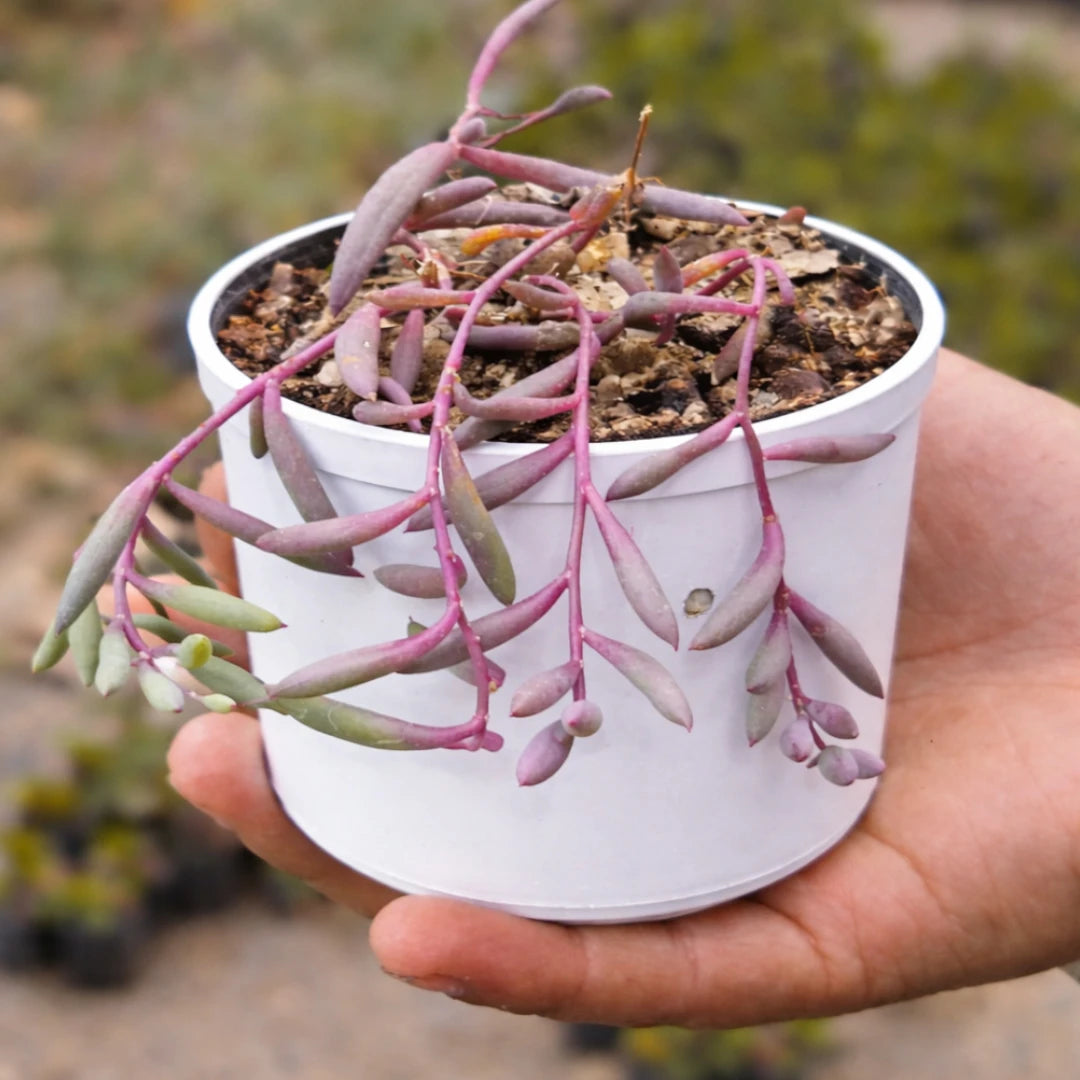
succulent ruby necklace plant Ruby Necklace Plant – Trailing Purple Succulent
SKU: 70897398317
succulent ruby necklace plant

succulent ruby necklace plant Ruby Necklace Plant – Trailing Purple Succulent

Sale price$23.27 Regular price$25.86
Save 10%

Pay in installments of $6.46 with ShopPay, AfterPay and Klarna

Shipping Estimate
USA
  • USA
  • CAN

Ships within 48 hours · Estimated delivery Jun 28 - Jul 3

Promo Codes Available:

For Your Every Summer RSVP, with Code: SUMMER15

Description

succulent ruby necklace plant Ruby Necklace Plant – Trailing Purple SucculentDispatch in 2 3 days Country of origin: India It's Compulsory to make unboxing video of parcel for refunds within 24 hours. Bare Rooted Overview of Othonna Capensis Common Name: String of Rubies, Ruby Necklace, Little Pickles Botanical Name: Othonna capensis Family: Asteraceae Type: Succulent Mature Size: 212 inches long, 48 inches wide Native Area: South Africa Hardiness Zones: 9 11 (USDA)Othonna capensis, commonly known as the String of Rubies or

  • Dispatch in 2-3 days
  • Country of origin: India
  • It's Compulsory  to make unboxing video of parcel for refunds within 24 hours.
  • Bare Rooted

Overview of Othonna Capensis

Common Name: String of Rubies, Ruby Necklace, Little Pickles
Botanical Name: Othonna capensis
Family: Asteraceae
Type: Succulent
Mature Size: 2–12 inches long, 4–8 inches wide
Native Area: South Africa
Hardiness Zones: 9-11 (USDA)Othonna capensis, commonly known as the String of Rubies or Ruby Necklace, is a popular trailing succulent characterized by its vibrant, fleshy leaves that can turn a striking ruby red when exposed to bright sunlight. This plant is not only visually appealing but also relatively easy to care for, making it a favorite among succulent enthusiasts.

Care Instructions

Light Requirements

  • Ideal Exposure: Othonna capensis thrives in full sun to partial shade. It requires at least six hours of direct sunlight daily. Indoors, place it near a bright south-facing window or under strong grow lights to maintain its vibrant color.

Soil and Potting

  • Soil Type: Use a well-draining soil mix, such as cactus or succulent potting mix. A mixture of two parts succulent soil and one part perlite or pumice is ideal for excellent drainage.
  • Potting Tip: Ensure pots have drainage holes to prevent water accumulation.

Watering

  • Watering Schedule: Allow the soil to dry out completely between waterings. Water thoroughly when the top inch of soil is dry, typically every 1 to 3 weeks depending on environmental conditions.
  • Signs of Overwatering: Yellowing leaves or mushy stems indicate overwatering, which can lead to root rot.

Temperature and Humidity

  • Optimal Temperature: This succulent prefers temperatures between 65°F to 85°F (18°C to 29°C) and should not be exposed to temperatures below 50°F (10°C) for extended periods.
  • Humidity Needs: Othonna capensis thrives in low humidity environments typical of its native habitat.

Fertilization

  • Feeding Schedule: Fertilize sparingly during the growing season (spring and summer) with a diluted fertilizer low in nitrogen. Frequent fertilization is not necessary.

Common Issues

Pests

  • Othonna capensis can be susceptible to pests such as mealybugs and aphids. Regularly inspect the plant for signs of infestation and treat promptly if needed.

Diseases

  • Overwatering is the primary concern for this succulent. Proper watering techniques are essential to prevent root rot.

Frequently Asked Questions

  1. How often should I water my Othonna capensis?
    Water when the top inch of soil feels dry, typically every 1 to 3 weeks depending on the season and environmental conditions.
  2. Can I grow Othonna capensis outdoors?
    Yes, it can be grown outdoors in USDA hardiness zones 9 to 11 but should be protected from frost and extreme cold.
  3. Why are my plant's leaves turning yellow?
    Yellowing leaves may indicate overwatering or insufficient light. Adjust your watering habits and ensure adequate sunlight exposure.
  4.  How do I propagate Othonna capensis?
    Propagation can be done through stem cuttings. Allow cuttings to callous for a few days before placing them in well-draining soil. Keep the soil barely moist until roots establish.
  5.  Is Othonna capensis toxic?
    This plant is generally considered non-toxic; however, it’s best kept away from pets and small children who may ingest parts of the plant.By following these care guidelines, Othonna capensis can thrive, adding vibrant color and unique beauty to your indoor or outdoor garden space.
Shipping Notes
  • Free Standard Shipping on $100+ Orders to the USA.
  • Except Preorder products are shipped in 48 hours.
  • Delivery to the USA:
  1. Standard Shipping : 3-10 business days
  • If time is of the essence, please consider selecting expedited delivery for faster service.
Exchange/Return Notes
  • We offer a 30-day return/exchange service after receiving.
  • Final sale items are not eligible for returns or exchanges.
  • To process your return/exchange, please contact us at [email protected]
  • Please click here for more details>>> Return & Exchange Policy
SKU: 70897398317
4.4 ★★★★★
Based on 2480 reviews
Sort
Highest Rating
Newest First
Oldest First
Product Reviews
J
Verified Purchase
Jellyshodi
Birmingham, US
★★★★★ 5
Good chew toy
Color: Purple & Blue
Our golden retrievers love these. They last awhile too
WAS THIS REVIEW HELPFUL?YesReportShare
Reviewed in the United States on May 24, 2026
S
Verified Purchase
Shan
Battle Creek, US
★★★★★ 5
Dog toy is tough and durable
Color: Blue&Red Fish
It’s great for aggressive chewers, my pittbull loves it
WAS THIS REVIEW HELPFUL?YesReportShare
Reviewed in the United States on May 2, 2026
C
Verified Purchase
CA
San Leandro, US
★★★★★ 1
Our dogs hurt their mouths chewing these bones
Color: Purple & Blue
I don't do a lot of reviews because I realize many are objective opinions. However, in this case I felt it was necessary to warn others. Our dogs are aggressive chewers. Their last rubber bones (not these) which we've purchased before, and recently purchased again, were destroyed quickly. Chunks of rubber came off the ends. Since those didn't hold up like they used to, I found these harder bones hoping they would last longer. They were able to gnaw into the hard plastic within a few minutes. This created sharp edges that cut their mouths. When I saw a bit of blood on the bones, I took them away from the dogs and threw them away. I wondered why they quit chewing on them after being so excited at first. Also, these are hard enough to damage a tooth.
WAS THIS REVIEW HELPFUL?YesReportShare
Reviewed in the United States on December 6, 2025
P
Verified Purchase
Patricia Smith
Chelsea, US
★★★★★ 2
Pups have shown zero interest in these toys….
Color: Purple & Blue
I would agree that these are indestructible being neither of my dogs have shown any interest in these at all. At this rate they should last forever…
WAS THIS REVIEW HELPFUL?YesReportShare
Reviewed in the United States on April 10, 2026
C
Verified Purchase
Cosmicethos
Charlottesville, US
★★★★★ 4
Durable but losses interest
Color: Purple & Blue
My dog is an aggressive chewer. She was interested in this toy while it was new, but soon after lost interest. Good news is although it took a beating it did not break or splinter. If soppy toys are disposable in your house, give it a try.
WAS THIS REVIEW HELPFUL?YesReportShare
Reviewed in the United States on June 8, 2026