philodendron lauterbachiana Alocasia lauterbachiana Variegata – Foliage FactoryAlocasia lauterbachiana variegata Alocasia lauterbachiana variegata is the variegated Purple Sword Alocasia: long serrated leaves, purple undersides and irregular pale patterning across the upper surface. Cream, white, pale mint or yellowish sections break through the green blade, while the plant keeps the upright stem and narrow leaf shape of the green species. Variegated Alocasia lauterbachiana shares the same species background as the green form:
Alocasia lauterbachiana variegata
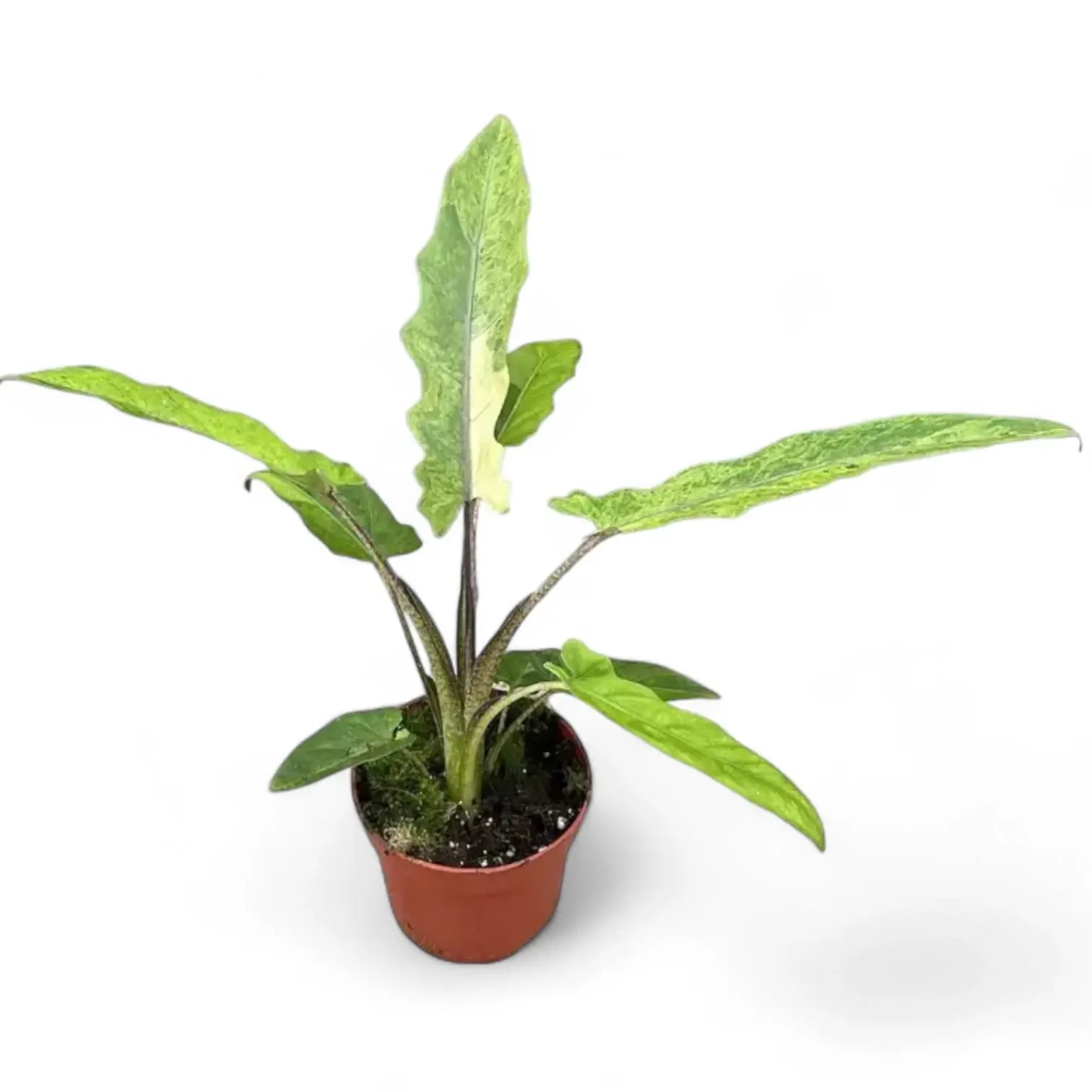
Alocasia lauterbachiana variegata is the variegated Purple Sword Alocasia: long serrated leaves, purple undersides and irregular pale patterning across the upper surface. Cream, white, pale mint or yellowish sections break through the green blade, while the plant keeps the upright stem and narrow leaf shape of the green species.
Variegated Alocasia lauterbachiana shares the same species background as the green form: northern New Guinea and the Bismarck Archipelago. It grows in warm lowland rainforest near river edges and forest margins. Care is similar to the green form, with extra attention to pale tissue.
Variegated sword foliage
The leaves are long, pointed and serrated, with the widest part closer to the base and a narrow extension toward the tip. Variegation appears as streaks, sectors, mottling or irregular patches across the green upper surface. The underside remains purple to brown-purple, so both leaf surfaces show different colouring.
Pale areas contain little or no chlorophyll. They create the contrast, but they contribute less to growth than green tissue and mark more easily from heat, direct sun, hard-water residue and strong fertiliser. A healthy plant usually carries a mix of greener and paler leaves.
Care for variegated Purple Sword Alocasia
-
Light for green tissue: Clear indirect light supports the green parts that power growth and helps the upright petioles develop well. Place pale sections out of hot direct sun.
-
Watering: Let pot weight and root warmth guide watering. The substrate should stay lightly moist during active growth while still drying enough for air to return.
-
Substrate: Use an airy, moisture-retentive mix with bark, coco husk and mineral drainage.
-
Temperature: Stable warmth helps variegated plants recover after transport, repotting or leaf loss.
-
Humidity: Raised humidity reduces dry marks on pale edges and helps long leaves unfold more evenly.
-
Feeding: Feed lightly to moderately only while roots and leaves are active. Pale tissue is more prone to salt marks from strong feeding.
-
Container: Use a stable draining pot. Move up in small steps as roots fill the container and the plant gains height.
Leaf pattern, growth rhythm and setbacks
Each new leaf can look different. Some leaves open greener, some show stronger pale sections, and colours often sharpen as the blade hardens. A greener leaf still supports the stem and roots.
The plant may slow in darker months or after repotting. During slower growth, water less often and keep conditions warm. Repotting, division and stem cutting are safest once new leaves or roots are active.
Common issues:
-
Brown marks on pale tissue: Sun scorch, heat stress, residue, fertiliser salts and contact damage are the first causes to check.
-
Yellowing leaves: The lower mix may be staying too wet or too cool.
-
Weak petioles: Poor roots, low light or unstable watering are common causes.
-
Small leaves: Stress, seasonal slowdown or root disturbance can reduce the next leaf size.
-
Pests: Thrips and spider mites often show early on pale tissue, serrated edges and leaf backs.
Leave marked but green leaves on the plant when they still function. Cut only leaves that have fully yellowed or collapsed. Propagation is by division, offsets or stem sections during active growth.
This variegated Alocasia contains calcium oxalate crystals. Keep it away from pets and children that may nibble plant parts, especially during pruning or division. The word variegata describes the patterned leaves; lauterbachiana honours Karl Lauterbach.
 ,
,
 and
and

 Promo Codes Available: