Pay in installments of $6.25 with
 ,
,
 and
and

Shipping Estimate
USA
- USA
- CAN
- USA
- CAN
Ships within 48 hours · Estimated delivery Jun 28 - Jul 3
 Promo Codes Available:
For Your Every Summer RSVP, with Code: SUMMER15
Description
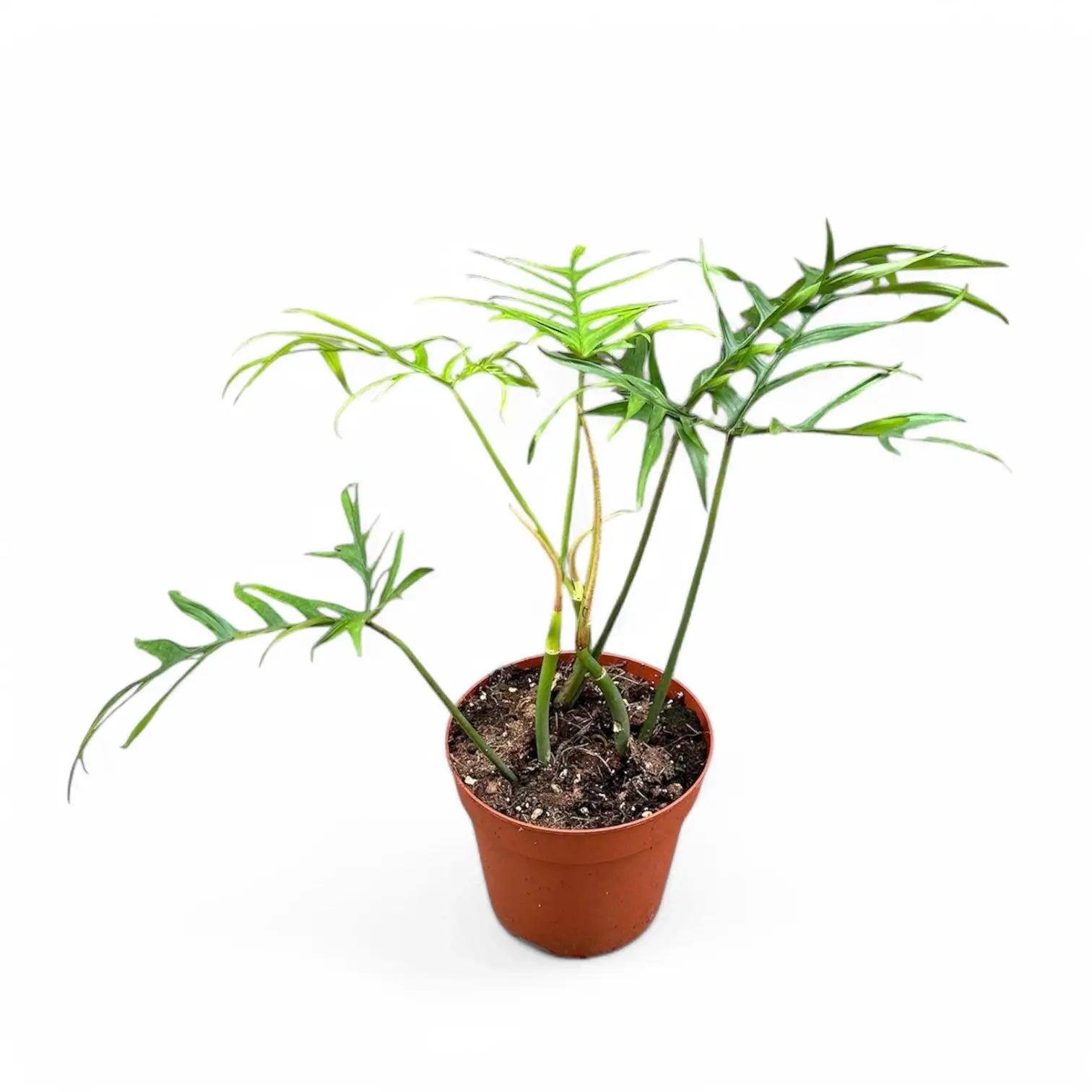
philodendron woody stem Philodendron polypodioides – Foliage FactoryPhilodendron polypodioides Philodendron polypodioides is grown for finely divided green leaves with narrow lobes and a light, almost fern like outline. Young plants may show simpler blades at first, while mature climbing growth can develop clearer pedate division and longer, more defined lobes. This climbing Araceae plant benefits from warm temperatures, bright filtered light and a support that lets the stem climb as the foliage matures. The fine leaf
Philodendron polypodioides
Philodendron polypodioides is grown for finely divided green leaves with narrow lobes and a light, almost fern-like outline. Young plants may show simpler blades at first, while mature climbing growth can develop clearer pedate division and longer, more defined lobes.
This climbing Araceae plant benefits from warm temperatures, bright filtered light and a support that lets the stem climb as the foliage matures. The fine leaf shape becomes clearer when the plant grows steadily, roots well, and develops beyond its juvenile form.
Narrow lobes and climbing growth in Philodendron polypodioides
- Leaf shape: Pedate, divided leaves with narrow lobes that become clearer as the plant matures.
- Leaf outline: Fine, deeply cut green foliage with a light, fern-like visual texture.
- Growth habit: Climbing Philodendron with nodes and aerial-root growth along the stem.
- Maturity change: Juvenile leaves can be simpler, with stronger division developing on settled climbing growth.
- Indoor character: A vertical-growing aroid with delicate divided leaves and a slim mature outline.
Divided foliage development in Philodendron polypodioides
The fine divided outline becomes more obvious as the plant gains size. Juvenile leaves can look simpler, while settled climbing growth can produce blades with clearer lobe separation and a more defined pedate shape.
A pole, plank or board helps the stem stay upright and gives aerial roots a surface to contact. Warmth, steady moisture and an airy root zone support stronger new leaves without keeping the substrate constantly wet.
Care for Philodendron polypodioides
- Light: Place Philodendron polypodioides in bright filtered light. Harsh direct sun can scorch or dry the narrow lobes.
- Water: Water when the upper part of the mix has started to dry, then let the pot drain fully.
- Humidity: Moderate to higher humidity helps divided blades expand cleanly without dry edges.
- Temperature: Keep warm and stable, ideally above 18 °C, with protection from cold draughts and cold wet substrate.
- Substrate: Use a chunky aroid mix with bark, mineral pieces and coarse fibre so the roots stay oxygenated.
- Support: Add support early enough for the stem to attach before the plant becomes long and loose.
- Pot choice: Use a free-draining pot that can hold the support securely without compacting the root zone.
- Repotting: Repot when roots fill the pot, the mix breaks down, or the support no longer sits firmly.
- Fertilising: Feed lightly during active growth with a balanced houseplant fertiliser at diluted strength.
- Growth rate: Growth is usually moderate indoors, with clearer leaf division developing on warm, supported plants.
Philodendron polypodioides pruning, propagation and mineral substrates
- Pruning: Trim damaged leaves at the petiole base or cut an overlong stem above a healthy node.
- Propagation: Propagate from stem cuttings with at least one node and healthy aerial-root tissue.
- Semi-hydro: Suitable for mineral or semi-hydro substrates if roots are kept warm, oxygenated and not stagnant.
- Training: Guide young stems onto support before internodes harden and the plant starts to lean.
Philodendron polypodioides weak division, root stress and pests
- Weak division: Juvenile growth is naturally simpler, but low light or unsupported stems can also produce smaller, less divided leaves.
- Root rot: Dense wet substrate can damage roots and slow new leaf production.
- Scorched lobes: Direct sun can dry or mark the narrow leaf segments.
- Dry edges: Low humidity, underwatering or heat stress can crisp the fine leaf margins.
- Pests: Check new growth, leaf backs, petioles and lobe bases for thrips, spider mites, mealybugs and scale.
Philodendron polypodioides safety
Philodendron polypodioides contains insoluble calcium oxalate crystals. Keep the plant away from pets and children that may chew leaves, petioles or stems.
Philodendron polypodioides name origin and botanical background
Heinrich Wilhelm Schott described the genus Philodendron in 1829 in Wiener Zeitschrift für Kunst 3: 780; the name combines Greek roots meaning “loving” and “tree.” Philodendron polypodioides was published by A.M.E. Jonker and Jonker in Acta Botanica Neerlandica 15: 143 in 1966 from Suriname material. The epithet polypodioides means Polypodium-like, referring to the fine, fern-like divided leaf outline.
The name is currently treated botanically under Philodendron pedatum, while Philodendron polypodioides remains the familiar horticultural name for this narrow-lobed plant.
With fine divided leaves and climbing growth, Philodendron polypodioides develops a light, narrow-lobed profile as it matures on support.
Shipping Notes
- Free Standard Shipping on $100+ Orders to the USA.
- Except Preorder products are shipped in 48 hours.
- Delivery to the USA:
- Standard Shipping : 3-10 business days
- If time is of the essence, please consider selecting expedited delivery for faster service.
Exchange/Return Notes
- We offer a 30-day return/exchange service after receiving.
- Final sale items are not eligible for returns or exchanges.
- To process your return/exchange, please contact us at [email protected]
- Please click here for more details>>> Return & Exchange Policy