Pay in installments of $7.39 with
 ,
,
 and
and

Shipping Estimate
USA
- USA
- CAN
- USA
- CAN
Ships within 48 hours · Estimated delivery Jun 30 - Jul 5
 Promo Codes Available:
For Your Every Summer RSVP, with Code: SUMMER15
Description
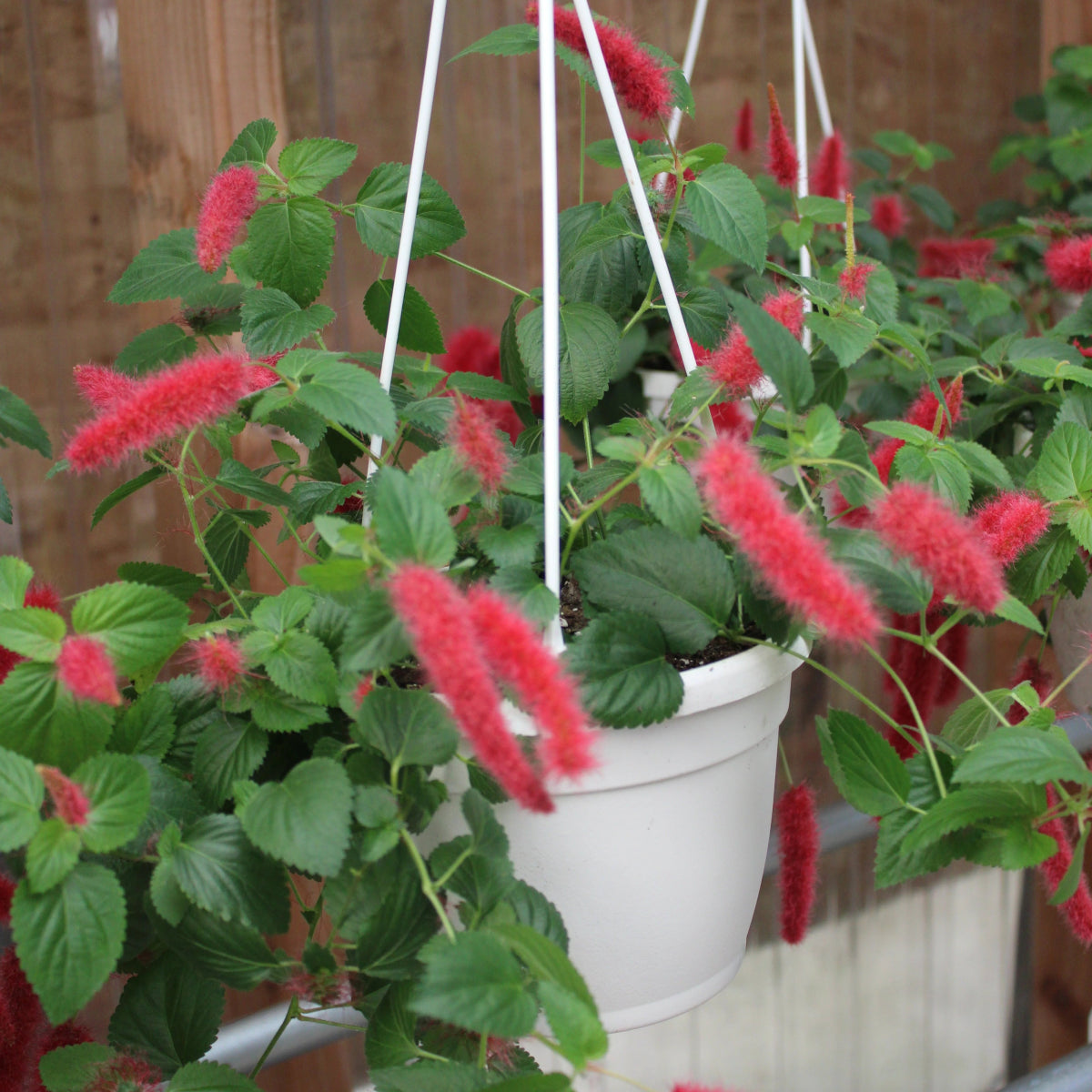
chenille plant indoors 6” Hanging BasketChenille Plant Hanging Basket: Cascading Beauty with Velvety Blooms The Chenille Plant (Acalypha hispida), also known as the Red Hot Cattail or Foxtail Plant, is a striking tropical plant admired for its long, fuzzy red flowers that cascade elegantly from hanging baskets. Its lush green foliage provides the perfect backdrop for the vibrant blooms, creating a bold statement in any indoor or outdoor space. With proper care, this showstopper will produce
Chenille Plant Hanging Basket: Cascading Beauty with Velvety Blooms
The Chenille Plant (Acalypha hispida), also known as the Red-Hot Cattail or Foxtail Plant, is a striking tropical plant admired for its long, fuzzy red flowers that cascade elegantly from hanging baskets. Its lush green foliage provides the perfect backdrop for the vibrant blooms, creating a bold statement in any indoor or outdoor space. With proper care, this showstopper will produce its signature blooms year-round, adding texture and color to your plant collection.
Plant Profile
- Botanical Name: Acalypha hispida
- Common Name(s): Chenille Plant, Red-Hot Cattail, Foxtail Plant, Monkey Tail
- Family: Euphorbiaceae
- Native Range: Malaysia and the South Pacific
Chenille Plant Care Guide
- Care Level: Moderate
- Light: Bright, indirect light to full sun
- Water: Keep soil consistently moist but not soggy; avoid letting it dry out completely
- Humidity: High; thrives in humid environments
- Temperature: 65-80°F
- Pruning: Regularly trim spent flowers and leggy stems to promote bushy growth
- Feeding: Fertilize every two weeks in spring and summer with a balanced liquid fertilizer; reduce feeding in fall and winter
- Propagation: Stem cuttings in spring or early summer
- Growth: Fast-growing; trailing stems can reach several feet long, making it ideal for hanging baskets
- Pests: Watch for spider mites, whiteflies, and aphids
- Toxicity: Toxic to pets and humans if ingested
Fun Fact About the Chenille Plant
The Chenille Plant gets its name from the French word for “caterpillar” due to its fuzzy, tail-like blooms. In warm climates, it can grow as a shrub, but in hanging baskets, it transforms into a cascading waterfall of velvety red flowers, bringing a tropical vibe to any space.
Cultivar History of the Chenille Plant
Native to the tropical regions of Southeast Asia and the South Pacific, the Chenille Plant has long been cultivated for its ornamental beauty. As part of the Euphorbiaceae family—home to poinsettias and crotons—it thrives in warm, humid conditions and is a favorite in both gardens and indoor plant collections. Its ability to bloom nearly year-round with the right care makes it a prized addition for plant lovers seeking bold color and texture.
Shipping Notes
- Free Standard Shipping on $100+ Orders to the USA.
- Except Preorder products are shipped in 48 hours.
- Delivery to the USA:
- Standard Shipping : 3-10 business days
- If time is of the essence, please consider selecting expedited delivery for faster service.
Exchange/Return Notes
- We offer a 30-day return/exchange service after receiving.
- Final sale items are not eligible for returns or exchanges.
- To process your return/exchange, please contact us at [email protected]
- Please click here for more details>>> Return & Exchange Policy