planting ginseng in pots 95Ficus microcarpa Ginseng S Type is an elegant and sculptural bonsai variety admired for its distinctive, swollen roots and graceful S shaped trunk. Native to tropical and subtropical regions of Asia, this bonsai form is cultivated for its dramatic aerial roots, smooth grey bark, and lush canopy of glossy green leaves. The S Type refers to the plants artfully curved trunk shaped to resemble a flowing, serpentine movement that conveys balance and
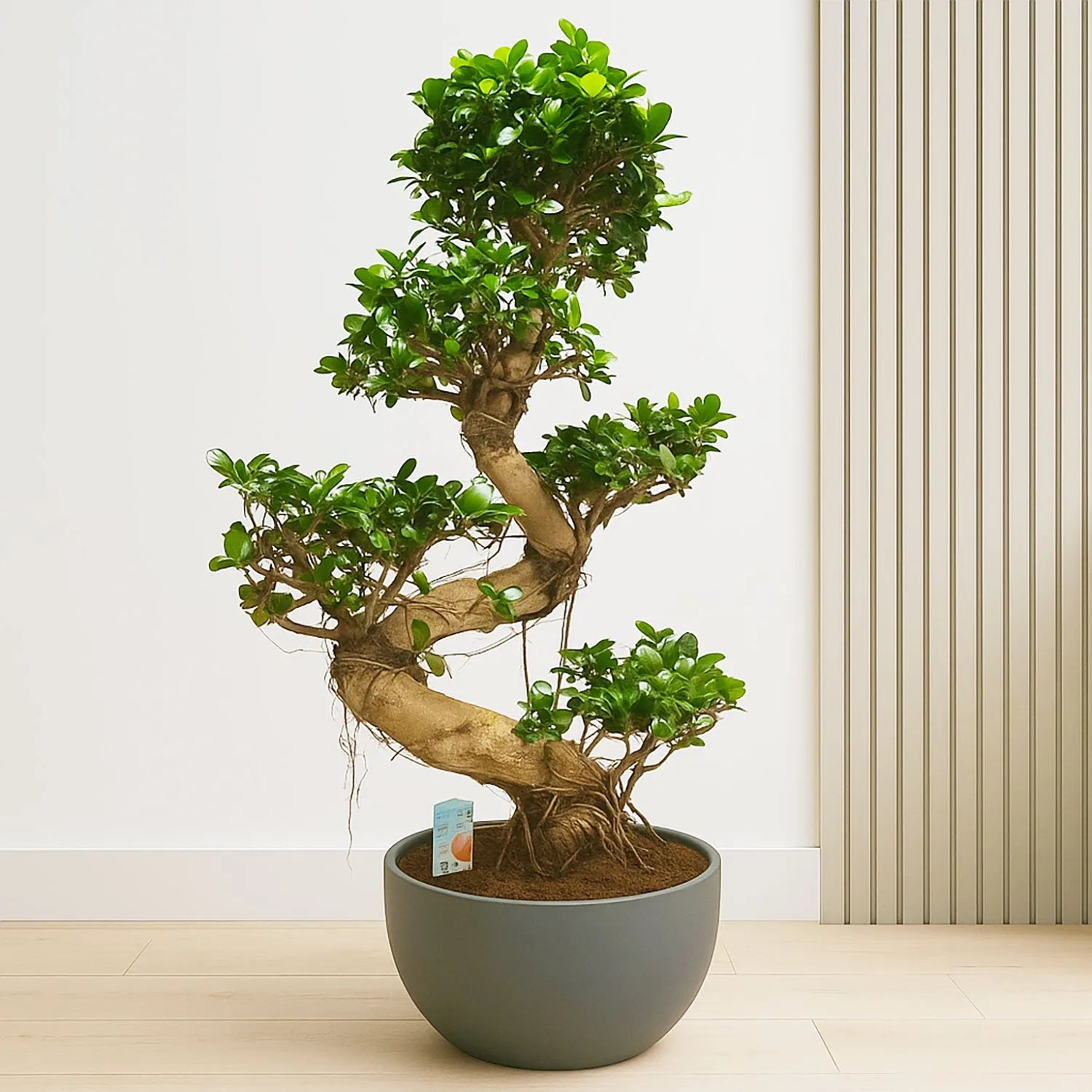
Ficus microcarpa ‘Ginseng’ S-Type is an elegant and sculptural bonsai variety admired for its distinctive, swollen roots and graceful S-shaped trunk. Native to tropical and subtropical regions of Asia, this bonsai form is cultivated for its dramatic aerial roots, smooth grey bark, and lush canopy of glossy green leaves.
The S-Type refers to the plant’s artfully curved trunk — shaped to resemble a flowing, serpentine movement that conveys balance and harmony. The thick, exposed roots (the “ginseng”) give the bonsai a grounded, ancient appearance, while the rounded crown of small, oval, deep-green leaves creates a lush contrast to the strong structure below.
Graceful yet powerful, Ficus microcarpa ‘Ginseng’ S-Type perfectly embodies the artistry of bonsai — a living sculpture that combines form, texture, and patience.
Ficus microcarpa ‘Ginseng’ S-Type Bonsai – Care Guide
Light
Thrives in bright, indirect light. Several hours of filtered sunlight each day will support healthy growth and leaf density. It can tolerate moderate light levels but should be kept near a window or under grow lights for best results. Avoid prolonged harsh sunlight, which can scorch the leaves, or deep shade, which may cause sparse foliage.
Watering
Keep the soil lightly moist but not soggy. Water thoroughly when the top 2–3 cm of soil feels dry, allowing excess water to drain freely. Bonsai trees are sensitive to water fluctuations, so maintain a consistent watering routine. Reduce watering during cooler months when growth slows.
Temperature and Humidity
-
Temperature: Prefers warm, stable temperatures between 18–28 °C. Avoid exposure below 15 °C and protect from cold drafts or sudden temperature drops.
-
Humidity: Enjoys moderate humidity (50–70%). Mist the leaves occasionally or place the pot on a pebble tray to maintain ambient moisture.
Soil and Potting
Use a free-draining bonsai soil mix, ideally containing akadama, pumice, and lava rock or coarse sand. This provides aeration while retaining enough moisture for root health. Repot every 2–3 years in early spring to refresh the soil and prune the roots if necessary.
Feeding
Feed every 4–6 weeks from spring to early autumn with a balanced liquid bonsai fertiliser. Reduce feeding frequency in winter. A slow-release organic fertiliser may also be used to maintain steady nutrition without overfeeding.
Pruning and Maintenance
Prune regularly to shape the canopy and maintain the classic bonsai silhouette. Trim new shoots after they produce 6–8 leaves, cutting back to 2–4 leaves to encourage branching. Wipe leaves occasionally with a soft, damp cloth to remove dust and highlight their natural shine.
Growth and Maturity
A slow to moderate grower, Ficus ‘Ginseng’ S-Type maintains its compact form naturally with regular pruning. Over time, the trunk and aerial roots thicken, enhancing the bonsai’s aged appearance. With proper care, it can live for decades, maturing into a refined, living sculpture of strength and serenity.
Common Issues
-
Yellow leaves: Overwatering or poor drainage.
-
Leaf drop: Sudden temperature changes or relocation shock.
-
Dull leaves: Low light or nutrient deficiency.
-
Pests: Occasionally scale or mealybugs; remove manually or treat with neem oil or insecticidal soap.
Background and Benefits
Ficus microcarpa, often known as the Chinese Banyan, is a symbol of resilience and longevity in many Asian cultures. The ‘Ginseng’ variety gets its name from its bulbous, root-like trunk base, which resembles the ginseng root. The S-Type form is shaped through years of careful cultivation, creating a sense of natural motion and balance prized in bonsai artistry.
Renowned for being one of the most beginner-friendly bonsai species, Ficus Ginseng tolerates a wide range of indoor conditions while retaining its strong visual impact. Beyond its ornamental beauty, it also acts as an air-purifying plant, improving indoor air quality and promoting a calm, mindful atmosphere — perfectly aligned with the bonsai tradition of harmony between nature and the home.
Quick Care Summary
Light: Bright, indirect light; tolerates moderate light
Water: Keep soil lightly moist; allow top 2–3 cm to dry before watering
Temperature: 18–28 °C; avoid below 15 °C
Humidity: Moderate (50–70%); mist occasionally
Soil: Free-draining bonsai mix – akadama, pumice, lava rock
Feed: Every 4–6 weeks in spring/summer
Growth: Compact bonsai form, 30–60 cm; thick ginseng roots, S-shaped trunk, and glossy green leaves
⚠️ Toxicity note: Contains latex sap that may irritate skin and is toxic if ingested. Keep away from pets and children.
Styling Tip
Display Ficus microcarpa ‘Ginseng’ S-Type Bonsai in a ceramic or glazed bonsai pot to accentuate its sculptural curves and polished canopy. Its natural balance of strength and grace makes it ideal for placement on low tables, shelves, or desks where it can be appreciated up close. Pair it with minimalist décor, small river stones, or moss accents for an authentic Zen-inspired aesthetic. The S-Type trunk shape adds movement and flow to interior spaces, symbolising balance, stability, and life in motion.
 ,
,
 and
and

 Promo Codes Available: