cryptanthus potting mix Cryptanthus zonatusCryptanthus zonatus Cryptanthus zonatus is a terrestrial earth star bromeliad with a broad, flattened rosette and strongly banded foliage. The wavy, toothed leaves form a star like outline, with irregular pale cross bands over green, bronze or deeper burgundy tones depending on the plant and growing conditions. This accepted species grows close to the substrate and expands outward as the rosette matures. Its patterned foliage is especially visible in
Cryptanthus zonatus
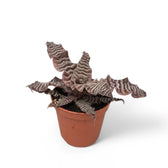
Cryptanthus zonatus is a terrestrial earth-star bromeliad with a broad, flattened rosette and strongly banded foliage. The wavy, toothed leaves form a star-like outline, with irregular pale cross-bands over green, bronze or deeper burgundy tones depending on the plant and growing conditions.
This accepted species grows close to the substrate and expands outward as the rosette matures. Its patterned foliage is especially visible in shallow planters, humid display cases and warm indoor collections where the rosette can be seen from above.
Cryptanthus zonatus main characteristics
- Accepted Cryptanthus species from north-eastern Brazil
- Low, open rosette with wavy, toothed leaves
- Distinct cross-banding across green, bronze or burgundy-toned foliage
- Terrestrial or lithophytic perennial from a wet tropical biome
- Small central flowers and basal offsets as part of the bromeliad growth cycle
Cryptanthus zonatus morphology and Brazilian habitat
Cryptanthus zonatus is an accepted species native to north-eastern Brazil, where it grows primarily in the wet tropical biome. It is recorded as a perennial or lithophyte, which aligns with its low, substrate-based growth and preference for warm, humid, well-aerated root conditions.
The rosette develops from many overlapping leaves that spread outward from the centre. The foliage has a firm texture, serrated margins and irregular horizontal banding. Small white flowers may appear from the centre of a mature rosette, while offsets around the base continue the plant as an indoor specimen.
Cryptanthus zonatus care indoors
-
Light: Offer bright filtered light or gentle partial sun. Shield the foliage from hot direct sun behind glass, which can scorch the bands and damage the leaf surface.
-
Watering: Water the substrate when the upper layer has begun to dry. Maintain light root-zone moisture during active growth, with full drainage after each watering.
-
Substrate: A humus-rich but open mix suits the roots. Fine bark, coco fibre, leaf-mould-style organic matter, perlite, pumice or lava granules help balance moisture and air.
-
Drainage: Use a pot with drainage holes. A shallow container suits the spreading rosette and keeps the root zone more evenly aerated.
-
Humidity: Keep humidity moderate to high, ideally around 50–75%. Cryptanthus zonatus responds well to stable air moisture with gentle airflow.
-
Temperature: Keep the plant in warm indoor conditions around 18–28 °C. Cold draughts and winter windowsills below about 15 °C can stress the roots and crown.
-
Feeding: Use a diluted fertiliser in spring and summer. Small, regular doses suit the modest root system.
-
Repotting: Replace the substrate when it compacts or when offsets fill the pot. Lift the rosette gently from below because the leaf margins can catch on skin.
-
Pruning: Remove spent outer leaves and old flowering rosettes once offsets have taken over. Keeping healthy leaves intact preserves the rosette outline.
-
Propagation: Separate basal offsets when they are large enough to hold their shape. Plant them shallowly and keep warmth, humidity and light stable during rooting.
-
Enclosed displays: Use terrariums and vitrines with ventilation, airy substrate and drainage away from the rosette centre.
Cryptanthus zonatus troubleshooting cues
-
Sun-marked bands: Check for hot direct sun or heat build-up near glass. Move it into bright filtered light and remove fully dried damaged leaves.
-
Dull colour: Check the brightness level first. Increase filtered light gradually so the foliage adjusts cleanly.
-
Brown tips: Check for dry air, fertiliser salts or uneven root moisture. Flush the mix and stabilise the watering rhythm.
-
Soft centre or base: Inspect crown moisture, substrate density and room temperature. Improve airflow, warmth and drainage promptly.
-
Mealybugs and scale: Search the central leaves, old leaf bases and young offsets. Early treatment matters because pests hide easily between the banded leaves.
Cryptanthus zonatus display notes
A shallow container gives the spreading rosette enough surface room, keeping the cross-banded leaves visible across the full plant. Leave space around the parent rosette for offsets to develop.
Cryptanthus zonatus placement and pet safety
The serrated leaf edges can feel rough during handling, so place Cryptanthus zonatus out of reach of pets that chew foliage and lift mature rosettes from the base.
Cryptanthus zonatus epithet and accepted identity
Cryptanthus comes from Greek roots meaning “hidden flower”, referring to the small flowers held within the rosette. Zonatus means “banded”, matching the cross-banded foliage. Accepted as Cryptanthus zonatus (Lem.) Vis., this species sits in the family Bromeliaceae.
In a shallow bowl, Cryptanthus zonatus shows bold cross-banding across a broad, low earth-star rosette.
 ,
,
 and
and

 Promo Codes Available: