house plant that looks like aloe Shop 'Climbing Aloe – Aloe ciliaris' Care and Growing Guide
SKU: 11905731069
house plant that looks like aloe

house plant that looks like aloe Shop 'Climbing Aloe – Aloe ciliaris' Care and Growing Guide

Sale price$20.31 Regular price$22.57
Save 10%

Pay in installments of $5.64 with ShopPay, AfterPay and Klarna

Shipping Estimate
USA
  • USA
  • CAN

Ships within 48 hours · Estimated delivery Jun 28 - Jul 3

Promo Codes Available:

For Your Every Summer RSVP, with Code: SUMMER15

Description

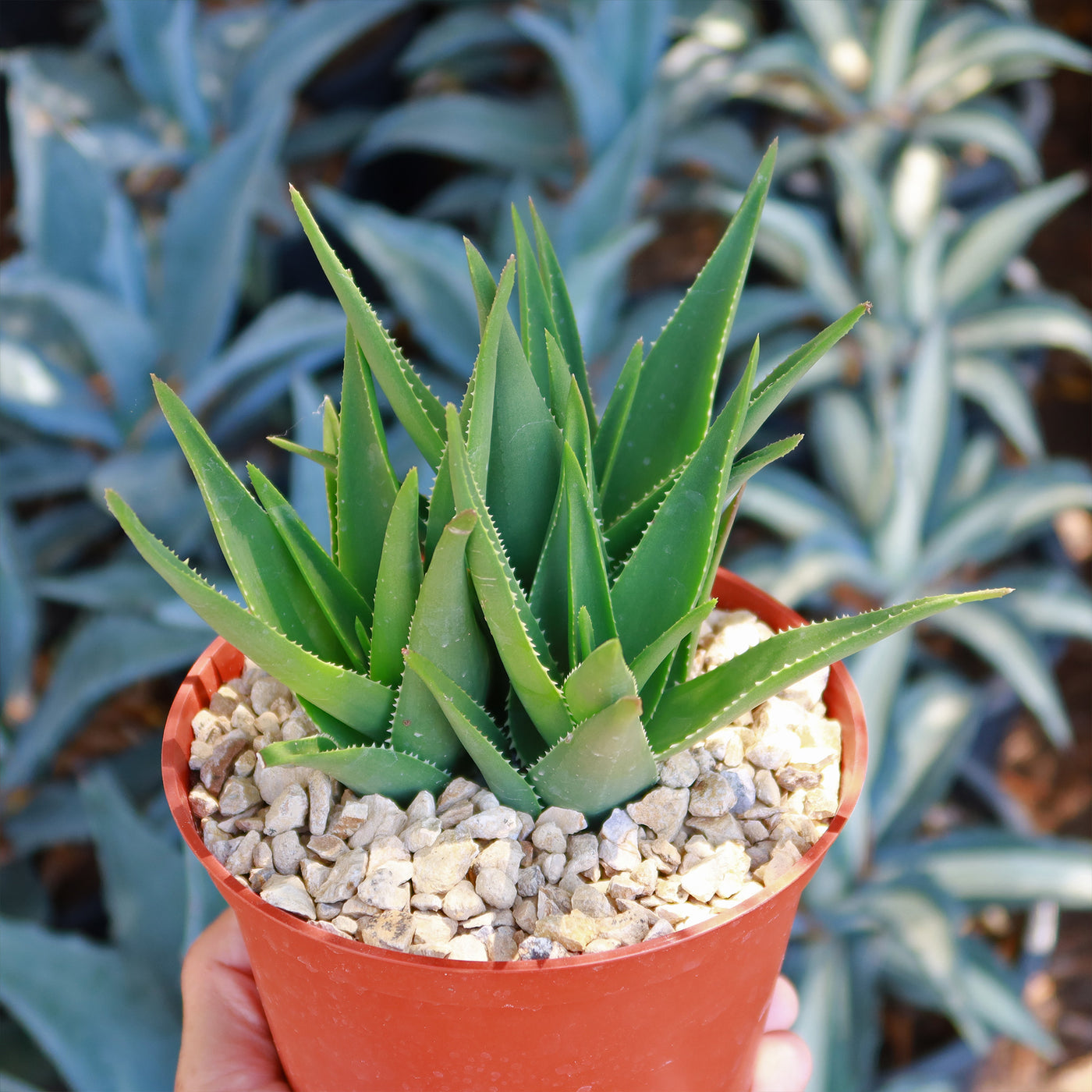
house plant that looks like aloe Shop 'Climbing Aloe – Aloe ciliaris' Care and Growing GuideIntroducing the climbing aloe, known as Aloiampelos ciliaris (formerly known as Aloe ciliaris), which is a fascinating succulent plant belonging to the Aloe, opens in a new tab genus. Native to the arid regions of Southern Africa, it has several common names, including the hot poker aloe, and most commonly the red hot poker aloe. Unlike most aloe species that grow in a rosette form, this aloe species produces cylindrical tall stems that can grow up to

Introducing the climbing aloe, known as Aloiampelos ciliaris (formerly known as Aloe ciliaris), which is a fascinating succulent plant belonging to the Aloe, opens in a new tab genus. Native to the arid regions of Southern Africa, it has several common names, including the hot poker aloe, and most commonly the red-hot poker aloe. 

Unlike most aloe species that grow in a rosette form, this aloe species produces cylindrical tall stems that can grow up to anywhere from 6 to 30 feet tall.  


These stems use small, hair-like teeth called cilia to attach themselves to rocks, trees, or other supports, allowing the plant to climb and spread to create a stunning vertical display.

The leaves of the climbing aloe are arranged in a spiral pattern along the stems and are narrow, elongated, and slightly curved.

They have a beautiful blue-green color with reddish-orange margins, adding a vibrant touch to any garden or indoor space. 

The plant is suitable for planting along sunny fences or trellises, although it has fleshy leaves and straggly stems.  

In terms of flowering, your climbing aloe produces striking tubular orange-red flowers. These flowers appear in clusters at the top of the stems during the spring, attracting pollinators such as birds and bees. The flowers add a burst of color to the plant and create a visually stunning contrast against the green foliage.  

When it comes to propagation, climbing aloe can be propagated through both seeds and offsets. Seeds can be collected from the dried flower stalks and sown in well-draining soil. Offsets, also known as pups, can be separated from the parent plant and replanted to establish new individuals.   

With proper Aloe ciliaris care and suitable conditions, it can grow and thrive in various environments. 

Watering Needs 

Like most succulents, this plant is adapted to survive in arid conditions, so it has a preference for infrequent watering. It's critical to let the soil dry out in between waterings because overwatering can cause root rot and other problems. 

In the spring and summer, during the active growing season, you can water your climbing Aloe about once every two to three weeks. However, it's crucial to adjust the watering frequency based on the environmental conditions and the moisture level of the soil. Always check the top few inches of soil before watering to ensure it has dried out completely.  

In the fall and winter, during the dormant period, your climbing Aloe requires even less water. Reduce the frequency of watering to about once a month or even less, as the plant's growth slows down during this time. Remember that succulents prefer to be underwater rather than overwater, as they are more tolerant of drought than excess moisture. 

When watering your Aloe ciliaris, make sure to water the soil directly rather than spraying the leaves. This helps prevent excess moisture on the foliage, which can lead to rot or fungal diseases. Use a well-draining soil mix specifically formulated for succulents to ensure proper water drainage. 

Light Requirements 

When it comes to indoor lighting, Aloe ciliaris thrives in bright, indirect light. Place your plant near a window where it can receive plenty of bright, filtered sunlight throughout the day. East or west-facing windows are usually ideal, as they provide the right balance of light intensity. If you don't have access to natural sunlight, you can also use fluorescent grow lights placed about 6-12 inches away from the plant to provide adequate light.  

When growing outdoors, your climbing Aloe is a sun-loving plant and does best in full sun to partial shade. So, choose a location that gets at least 6 hours of direct sunlight per day. 

 However, it's important to acclimate your plant gradually to direct sunlight if it has been indoors or in a shaded area. Start by placing it in a spot with partial sun for a few hours a day, then gradually increase the exposure to full sun over a couple of weeks. 

Remember, when it comes to light, it's crucial to find the right balance. Too much direct sunlight can cause sunburn and damage the leaves, while too little light can lead to leggy growth and a lack of flowering. Observing your plant's response to light and making adjustments accordingly will help ensure its healthy growth and blooms.

So, whether you're keeping your climbing aloe indoors or planted outdoors, providing it with the right amount of bright, indirect light or direct sunlight will help it thrive and show off its beautiful foliage and flowers. 

Optimal Soil & Fertilizer Needs 

When it comes to soil, this climbing aloe grows best in a well-draining potting soil that mimics its natural habitat. You can create a suitable soil blend by combining equal parts of cactus potting mix, perlite, and coarse sand. This mixture allows for proper drainage, preventing the roots from sitting in water and potentially rotting. Instead, make or buy a well-draining potting mix, or ideally use our specialized succulent potting mix, opens in a new tab that contains 5 natural substrates and mycorrhizae to promote the development of a strong root system that helps your succulent to thrive.  

Aloe ciliaris is not a heavy feeder, so it doesn't require frequent fertilization. In the spring, during the active growing season, you can fertilize your climbing Aloe once a year with a balanced (5-10-5), water-soluble NPK fertilizer diluted to half the recommended strength. This will provide the necessary nutrients without overwhelming the plant. Be sure to follow the instructions on the fertilizer packaging for proper dilution and application.  

It's important to note that during the winter months, Aloe ciliaris goes through a period of dormancy, and its growth slows down. During this time, it's best to withhold fertilizer and allow the plant to rest. 

Hardiness Zones & More 

When growing indoors, the climbing aloe thrives in average room temperatures ranging from 60 to 80 degrees Fahrenheit. It's important to keep the plant away from drafts and extreme temperature fluctuations, as they can stress the plant. As for humidity, Aloe ciliaris is adaptable and can tolerate average indoor humidity levels. To enhance home air humidity, place a water-filled tray near a plant or use a humidifier to increase the humidity in the air. 

For outdoor cultivation, Aloe ciliaris is native to South Africa and is well-suited in USDA hardiness zones 9 to 11, which generally have mild winters and hot summers. In these zones, the plant can be grown outdoors year-round. It can tolerate temperatures as low as 25 degrees Fahrenheit but may require protection from frost and freezing temperatures. During cold weather, it's best to bring the plant indoors or provide frost protection, such as covering it with a blanket or moving it to a sheltered area.  

When it comes to humidity, outdoors, climbing aloe prefers low to moderate humidity levels. It can tolerate dry conditions and is well-adapted to arid environments. However, it's important to note that excessive humidity can increase the risk of fungal diseases. Therefore, it's best to avoid high humidity and ensure proper air circulation around the plant. 

Final Thoughts 

Overall, the climbing aloe (Aloe ciliaris) is a unique and visually stunning succulent plant. It has slender stems that can climb and attach themselves to supports, creating a beautiful vertical display. The leaves are narrow and blue-green with reddish-orange margins, and they produce vibrant orange or red tubular flowers. To care for Aloe ciliaris, make sure it gets plenty of sunlight, well-draining soil, and water sparingly, allowing the soil to dry out between waterings. It's a low-maintenance plant that can add a touch of beauty to any garden or indoor space.   

Give it a try, and enjoy the beauty and intrigue this unique Climbing Aloe ciliaris brings to your home or garden! 
Shipping Notes
  • Free Standard Shipping on $100+ Orders to the USA.
  • Except Preorder products are shipped in 48 hours.
  • Delivery to the USA:
  1. Standard Shipping : 3-10 business days
  • If time is of the essence, please consider selecting expedited delivery for faster service.
Exchange/Return Notes
  • We offer a 30-day return/exchange service after receiving.
  • Final sale items are not eligible for returns or exchanges.
  • To process your return/exchange, please contact us at [email protected]
  • Please click here for more details>>> Return & Exchange Policy
SKU: 11905731069
4.8 ★★★★★
Based on 941 reviews
Sort
Highest Rating
Newest First
Oldest First
Product Reviews
B
Verified Purchase
Bossman
Lake Worth, US
★★★★★ 5
Absolutely Love This Receiver
The Onkyo TX‑NR7100 has completely transformed my home theater. The sound quality is rich, detailed, and powerful, and the 9.2‑channel setup gives movies and music a level of immersion I didn’t realize I was missing. Dirac Live right out of the box is a huge win — the room correction made an immediate, noticeable improvement. Setup was smooth, the interface is clean, and everything from streaming to switching inputs feels fast and reliable. It also plays perfectly with the rest of my system, and the THX certification really shows in how cinematic everything sounds. I absolutely love this receiver. It’s one of those upgrades that makes you wonder why you didn’t do it sooner.
WAS THIS REVIEW HELPFUL?YesReportShare
Reviewed in the United States on February 20, 2026
J
Verified Purchase
James Tepper
Carnegie, US
★★★★★ 5
Incredible 9.2 Surround receiver at an unbeatable price.
I may return at a future date to give a more complete review, but others that are much more knowledgeable about audio equipment than I have already done so. For me, the Onkyo (Onkyo TX-NR7100 9.2-Channel 8K/4K Network A/V Receiver) replaced a much older (2001) TX DS787 5.1 100 W Surround receiver that listed new for around $1050. I probably didn't pay quite that much but certainly something near $900. It was great for its time, perhaps even advanced with THX, Dolby, and other listening modes. But it didn't have: HDMI inputs or outputs, any BlueTooth capability, no hard wired or WiFi connectivity or basically any operating or connection modes that most all modern receivers have. This turned into a big problem with modern LED/LCD/OLED TVs, Alexa and other now common devices. I bought my new Onkyo TX-NR7100 from Amazon for $625. Other retailers (e.g.Best Buy) advertise it for up to $1200, so Amazon's price is outstanding. Set up was far more complicated (for me) than any previous receiver that I ever owned, mostly because there were a very large number of back panel input and output jacks, to and from the TV, as well as speaker outputs for 9.2 surround. Suffice it to say that once everything was connected properly (I made a few mistakes along the way), I was completely thrilled. The On Screen Display, completely accessible either from the front panel or the remote was far superior to anything I had ever seen before. Literally every operating parameter is accessible to the user. And I used most of them. It is also completely WiFi ready so my 150 Gbit home Wifi network lets it connect wirelessly and stream music error free. BlueTooth is also another way to connect almost any device to it for audio and audio/video playback if you connect the digital connections to and from a modern TV. It also speaks and listens to Alexa, although I must confess that I haven't played around with that much yet. This is already much longer than I had intended, so let it suffice to say that the Onkyo TX-NR7100 is an absolutely incredible receiver for an incredible price. I'd give it 8 stars if I could. JM TEPPER
WAS THIS REVIEW HELPFUL?YesReportShare
Reviewed in the United States on November 7, 2024
B
Verified Purchase
Brian M.
Birmingham, US
★★★★★ 5
Sounds great.
Just received my Onkyo TX-NR 7100, watched a few YouTube videos before it arrived, so set up was easy. Ran accuEQ, I am getting new front speakers so I’ll wait to run Dirac. After accuEQ, I still had to make a few adjustments, to the speaker levels and especially the sub. It set my subwoofer way too low. As of right now having no problems with Bluetooth. I’ve only listened to music so far, can’t wait to watch a movie. For now I have a 5.1.2. System, getting new fronts, the Klipsch r51-m’s will go to the rear surround and Klipsch r41-m’s will be my height speakers in a 5.1.4 system. So far loving this avr. Update 2: Just calibrated with Dirac for the 6th time. They tell you if you sit in a recliner, reclined measure with it reclined. Well I measured with the chair in its upright position. It makes a huge difference I hear the surrounds much better. Btw I listen to all channel stereo, I know audiophiles say it sucks, however I listened to 2 channel stereo for 20 years, when there was nothing else. I didn’t buy a 9 channel avr to listen to 2 channel stereo. Like Randy the cheap audio man says “ audiophiles aren’t always right. If it sounds good to you, that’s all that matters.” So try calibrating in the upright position, or if you sit on a stationary chair or couch, try positioning the mic slightly forward of your listening position. It makes a huge difference. Hope this helps, enjoy. Update: Ok bought Klipsch rp-600m speakers for the front with 52c center. 51m surrounds, 41m rear heights. Polk owm3 front heights. Why Polk? Lighter easy to hang and as height speakers they are only there for atmos. Ran Dirac live, the application does what it would take several hours to make it sound like it does, if I even could get it to sound so good. Apple TV 4K with my Hisense U8K. The google tv interface is ok, but Apple TV is faster and easier. The Onkyo 7100 is a gem, runs pretty warm but I have it out in the open. If you are going to put in a cabinet I suggest a fan. Very happy with the whole system.
WAS THIS REVIEW HELPFUL?YesReportShare
Reviewed in the United States on January 11, 2025
A
Verified Purchase
Amazon Customer
Lexington, US
★★★★★ 5
Great for UTV rear light install!
Size: 16AWG -10FT 2Pin DT
I had a set of 3” Nilight pod lights with wiring harness to install as rear lights on my Ranger 570 SP. The Nilight harness with relay was great! But it was too short to keep the relay and fuse in the front compartment on the pulse panel. These were the perfect solution! The extensions are plugged in under the tunnel to each of the individual light leads from the Nilight harness. And there was just enough length to run behind the seat back, up the driver side roll bar, and to each light. (Had about 1’ too much for passenger side light, so should be fine for full-size Ranger too.) Now have a weatherproof, factory quality installation with no splices or solder joints. The only mods I had to make for the entire install (not related to these extension cables) were: 1) Cutting the ring lugs off and adding waterproof heat shrink butt splices to Polaris pulse plug, and 2) Buying a factory-style Carling L1 illuminated switch to replace the round switch provided. (This is a direct plug and play too since the Nilight switch wiring has 1/4” faston connectors.)
WAS THIS REVIEW HELPFUL?YesReportShare
Reviewed in the United States on September 27, 2024
M
Verified Purchase
Marshall Quinn
Omaha, US
★★★★★ 5
Exactly what I needed
Size: 16AWG -10FT 2Pin DT
This was perfect for me. I had two lights bars in my rear bumper and needed to extend the harness to my fuse block. Great value
WAS THIS REVIEW HELPFUL?YesReportShare
Reviewed in the United States on January 19, 2026